
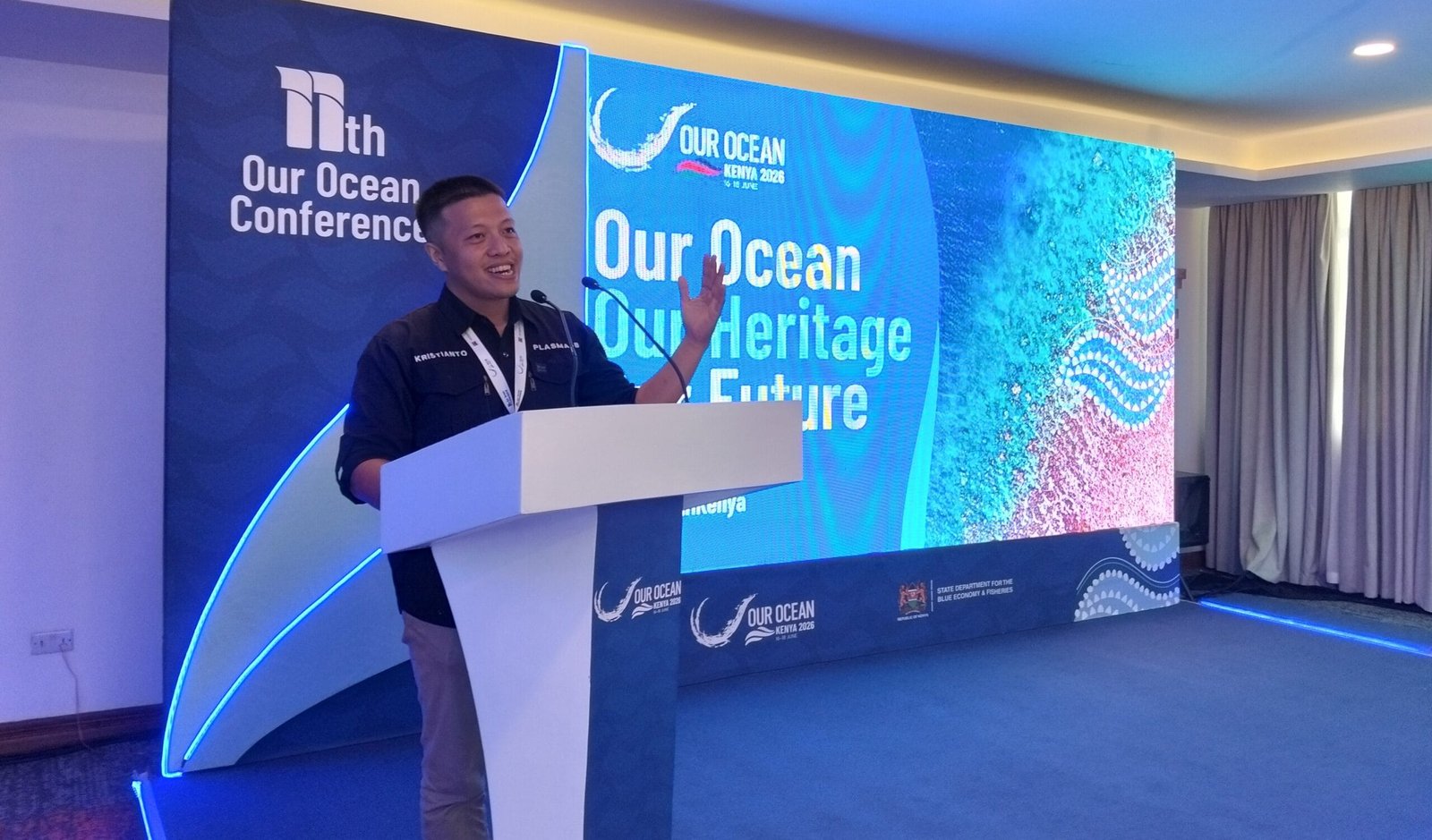
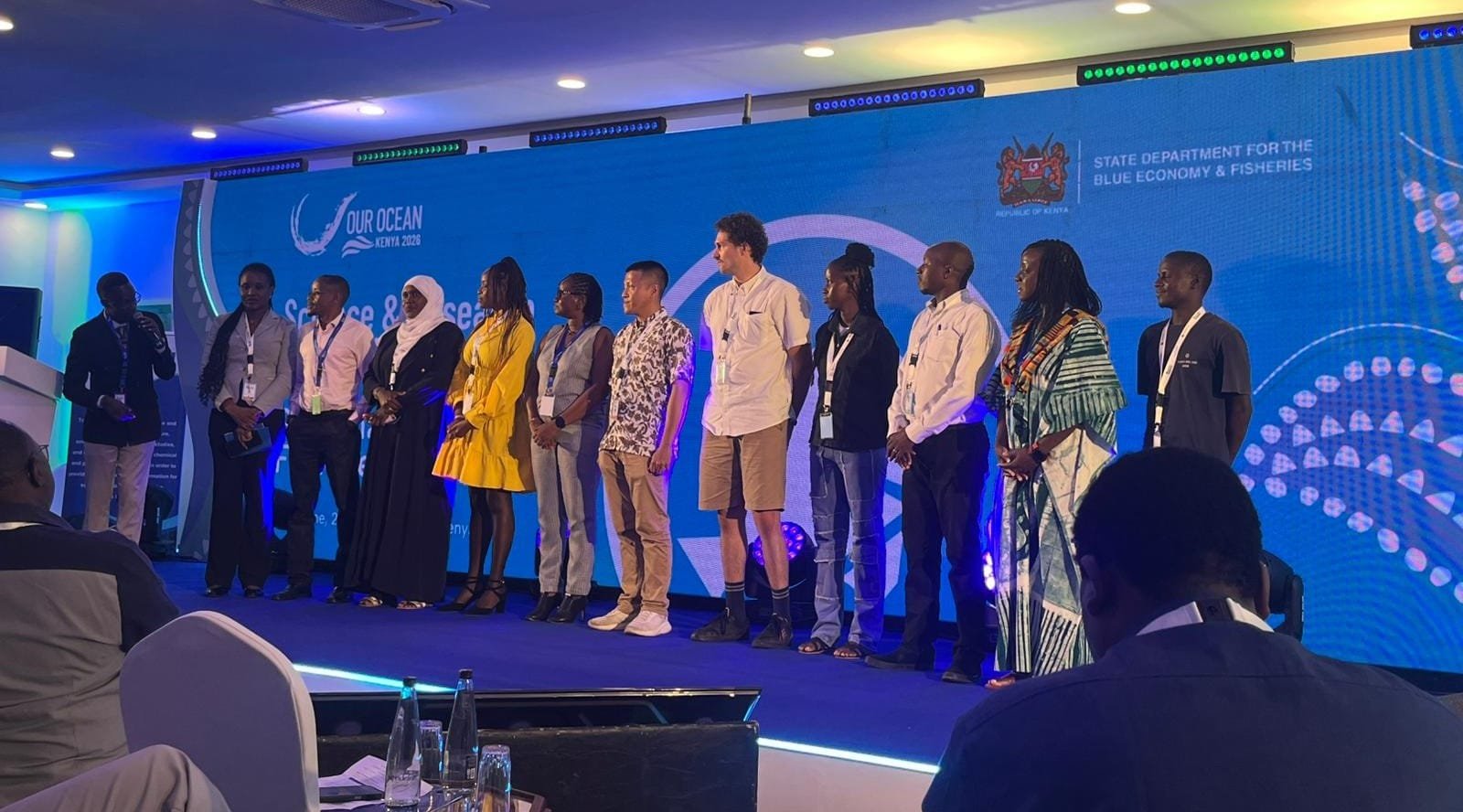
As part of the Our Ocean Conference (OOC) 2026, BINTARI participated in the Our Ocean Conference Research Symposium, held on 14–15 June 2026 in Mombasa, Kenya. This international scientific forum brought together researchers, policymakers, civil society organizations, donors, and marine and environmental practitioners from around the world to exchange research findings, field experiences, and innovative solutions for sustainable ocean management.
During the symposium, BINTARI presented key lessons learned from the PLASMA-B (Plastic Waste Management for Biodiversity Protection) Program, implemented in the Lease and Banda Islands, Central Maluku Regency, Indonesia. The presentation explored the challenges of developing a circular economy in remote island settings characterized by limited material volumes, high transportation costs, and restricted access to recycling markets.
In this presentation, BINTARI introduced the concept of “Geography-Constrained Circularity”—a condition in which recyclable materials are technically available but are unable to circulate efficiently due to geographical barriers, small economies of scale, and limited logistics networks.
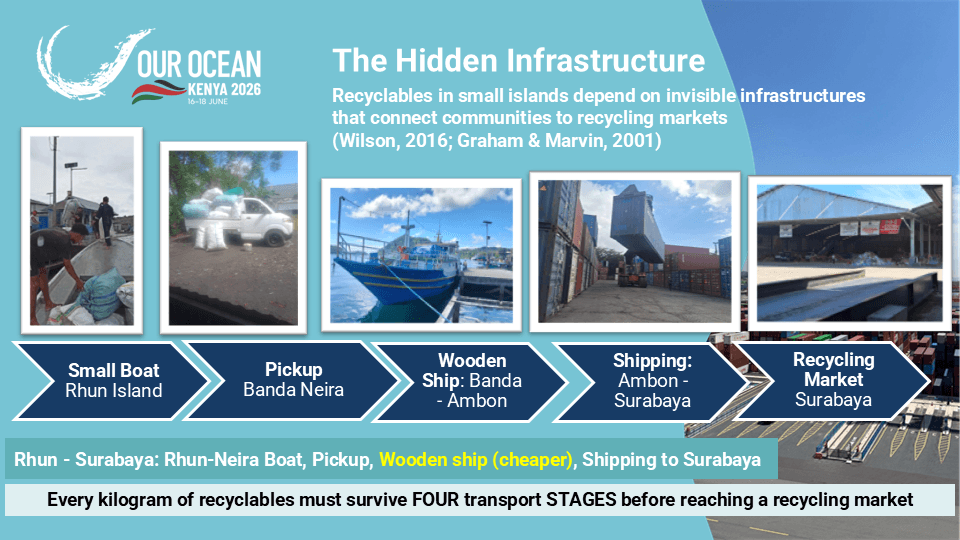
Using the Banda Islands as a case study, BINTARI traced the journey of plastic waste from remote small islands to regional recycling markets. The findings demonstrated that the success of a circular economy in archipelagic regions depends not only on behavioral change and technological availability but also on geographic realities and inter-island transportation systems.
One of the most notable reactions from symposium participants occurred when BINTARI highlighted that Indonesia consists of more than 17,000 islands. This immediately sparked discussions about how circular economy systems can function effectively when recycling facilities, material markets, and logistics infrastructure are concentrated in only a handful of locations.
Participants also raised questions regarding the potential of upcycling initiatives, financing mechanisms for transporting recyclable materials from small islands, and long-term strategies to reduce plastic waste generation at its source. During the discussion session, the moderator emphasized the importance of prioritizing Refuse and Reduce approaches in small island contexts, noting that recycling often entails substantial logistical costs and may not always be economically viable.
BINTARI’s presentation demonstrated that the challenges faced by the Banda Islands are shared by many small island regions worldwide, including Small Island Developing States (SIDS) across the Pacific, Caribbean, and Indian Ocean regions. As such, there is a growing need to develop circular economy models that are better suited to island contexts, taking into account logistics constraints, market scale, institutional capacity, and technology affordability.
BINTARI’s participation in this forum reinforces Indonesia’s position as an important learning laboratory for plastic waste management in archipelagic environments. The symposium also created opportunities for future collaboration with researchers, donors, development organizations, and policymakers working on marine plastic pollution, circular economy, island logistics, and sustainable development in coastal and small island regions.
Through cross-country knowledge exchange and collaboration, it is hoped that more effective, inclusive, and geographically appropriate solutions can be developed to address waste management challenges in island communities around the world.